
When people design an artificial green wall, the foliage is understandably the main focus. Which plants should you choose? How large should the wall be? Where should it go? What colour and texture combination will work best?
One element that is often overlooked, however, can make a surprisingly significant difference to the finished result: lighting.
The right green wall lighting can transform an artificial green wall from an attractive daytime feature into something that becomes a genuine focal point after dark. It can bring out the depth of the foliage, highlight different textures, create atmosphere and make the greenery feel like an integral part of the wider space rather than something that simply happens to be attached to a wall.
This is particularly important in gardens. Outdoor spaces are increasingly being designed for use throughout the evening, whether that means entertaining friends, enjoying dinner outside or simply relaxing after a long day. A garden that looks beautiful at 3pm but disappears into darkness at 9pm is missing an opportunity.
There is an important distinction to make at the outset, though. This article is about lighting an artificial green wall for aesthetic purposes. We are not talking about specialist horticultural lighting systems used to keep living plants alive indoors. Artificial greenery does not need light to grow, so the green wall lighting choices are entirely about how you want the installation to look and how it interacts with the surrounding space.
So, what is the best way to light an artificial green wall? Should you light it from above, below or directly at the foliage? Or should you leave it completely unlit?
The answer depends on the space, the wall and the effect you want to create.
Why Does Green Wall Lighting Matter?
The simplest answer is that lighting changes how we perceive a space.
During daylight, an artificial green wall benefits from natural light that picks out the different layers of foliage. Leaves overlap one another, shadows appear between plants and the varying colours and textures become visible.
Once the sun goes down, much of that depth can disappear.
Without any artificial illumination, a green wall can become little more than a dark silhouette. That does not necessarily mean it looks bad. In some gardens, this understated effect can actually work extremely well. However, if you have invested in a premium artificial green wall because you want it to be a major design feature, it is worth considering whether green wall lighting could help you get even more from it.
Lighting can also change the perceived mood of a space. Soft illumination can create a warm, relaxing atmosphere, while more directional lighting can make a green wall feel dramatic and architectural.
This is why green wall lighting should ideally be considered as part of the overall design rather than treated as an afterthought.
Green Wall Lighting in Gardens
Gardens are particularly well suited to creative lighting.
Outdoor spaces often contain several different elements, including patios, seating areas, pergolas, outdoor kitchens, planting beds, water features and architectural structures. Lighting allows these elements to work together after dark rather than leaving some features completely hidden.
An artificial green wall can become one of the strongest visual anchors in the garden.
Imagine a green wall positioned behind an outdoor sofa. During the day, it provides a lush backdrop to the seating area. In the evening, carefully positioned lights illuminate the foliage, creating a warm and atmospheric setting.
Alternatively, a green wall could be positioned behind an outdoor dining area, beside a pool or along the boundary of a garden. Green wall lighting can help distinguish it from the surrounding planting and make the greenery visible from across the garden.
There is also an important practical consideration. A well-lit garden generally feels more usable after sunset. Rather than illuminating every surface equally, lighting can be used selectively to draw the eye towards particular features. A green wall is an excellent candidate for this because its irregular foliage naturally creates interesting patterns of light and shadow.
Uplighting an Artificial Green Wall
Uplighting is one of the most effective ways of creating drama.
As the name suggests, the light source is positioned below the green wall and directed upwards into the foliage. Rather than illuminating the plants uniformly, the light travels through the lower layers and creates shadows behind the leaves.
This can make the wall appear deeper and more three-dimensional.
The effect is particularly attractive with dense, layered artificial greenery because the foliage naturally interrupts the light. Some leaves become brightly illuminated while others remain partially hidden, creating the sort of variation you might expect from natural planting.
Uplighting can also work particularly well when the green wall is relatively tall. Several carefully positioned light sources can create pools of illumination across the installation rather than attempting to illuminate the entire wall from one point.
The exact positioning is important, though. Lights that are too powerful or too close can create harsh hotspots, while lights positioned too far away may fail to illuminate the foliage effectively.
Downlighting a Green Wall
Downlighting takes the opposite approach.
Instead of placing lights at ground level, the light source is positioned above the green wall and directed downwards.
This can create a softer, more natural-looking effect, particularly when the green wall is positioned beneath a roof, pergola or other overhead structure.
Downlighting can also be useful when the primary objective is to illuminate the surrounding area as well as the greenery itself. A light positioned above a green wall could simultaneously provide illumination for a seating area, pathway or outdoor dining space.
The resulting effect can be less dramatic than uplighting, but that is not necessarily a disadvantage. If you’re trying to create a calm, sophisticated garden rather than a highly theatrical installation, downlighting may be the better choice.
Using Spotlights to Highlight an Artificial Green Wall
Spotlights offer perhaps the greatest degree of control.
Rather than illuminating the entire wall, you can use individual lights to highlight specific sections, plants or textures.
This can be particularly effective when the green wall incorporates different foliage types. Vistafolia’s Colour and Texture Boxes, for example, allow customers to introduce different colours and textures into their installation. Carefully positioned green wall lighting can emphasise these differences after dark.
Spotlights can also be used to create focal points within a larger installation.
You might choose to illuminate the centre of the wall while allowing the outer sections to remain darker. Alternatively, several spotlights can be positioned at different angles to create a more even wash of light.
The advantage of this approach is that you are not necessarily trying to make every part of the green wall equally bright. Instead, you’re using light deliberately to control how the wall is viewed.
Should You Light Your Green Wall at All?
This is an important question because there is absolutely no requirement to illuminate an artificial green wall. Sometimes, less really is more.
A green wall positioned in an already well-lit area may receive enough ambient illumination from other garden lighting, nearby buildings or architectural lighting that additional fixtures simply aren’t necessary.
There is also something to be said for allowing an artificial green wall to become a darker backdrop after sunset. If the surrounding garden contains several illuminated features, leaving the greenery relatively subdued can create contrast and prevent the space from becoming visually overwhelming.
The best green wall lighting scheme is not necessarily the one with the most lights.
Instead, think about what you want people to see and where you want their attention to go.
If the green wall is intended to be the main focal point, lighting it makes sense. If it is primarily intended as a backdrop to an already prominent feature, more subtle illumination may be preferable.
How Do You Choose the Right Green Wall Lighting?
There is no universal green wall lighting formula because every installation is different.
The size of the wall, its location, the surrounding architecture, the amount of natural light, the position of seating areas and the desired atmosphere all influence the decision.
It is worth considering the wall in the context of the entire garden rather than looking at it in isolation.
For example, a green wall beneath a pergola might naturally lend itself to downlighting because the structure provides an obvious location for fixtures. A freestanding wall in an open garden may be better suited to discreet uplighters positioned at ground level.
The colour temperature of the lighting also deserves consideration. Warmer light can create a relaxed and inviting atmosphere, while cooler lighting tends to produce a more contemporary appearance. Neither is inherently right or wrong, but the choice should complement the wider design.
The intensity matters too. Artificial foliage can look incredibly convincing under the right green wall lighting, but overly bright fixtures can make even premium greenery appear harsher than intended.
Can Green Wall Lighting Make Artificial Greenery Look More Realistic?
It certainly can. Real plants have an enormous amount of natural variation. Leaves sit at different angles, some are exposed to direct sunlight and others remain in shade, and overlapping foliage creates constantly changing patterns.
Good green wall lighting can reproduce some of this visual complexity. When light passes through and around layered foliage, it creates highlights and shadows that emphasise the three-dimensional structure of the installation. This can make artificial greenery appear even more natural than it does under flat, uniform illumination.
This is particularly relevant when choosing a high-quality artificial green wall in the first place.
Green wall lighting cannot make a poor-quality product look premium. If the foliage is sparse, repetitive or overly plastic-looking, adding spotlights may simply highlight those shortcomings.
However, when combined with genuinely realistic greenery, thoughtful lighting can enhance the characteristics that make the product convincing.
Green Wall Lighting for Different Applications
The ideal approach can vary considerably depending on where the wall is being installed.
In a garden, lighting can help extend the visual impact of the green wall into the evening and make an outdoor seating or dining area feel more atmospheric.
Around a swimming pool, carefully positioned green wall lighting can create a particularly dramatic backdrop. The combination of water reflections and illuminated greenery can completely change the appearance of the space after dark.
For restaurants and hospitality venues, green wall lighting can help create a memorable atmosphere while ensuring that an attractive green wall remains visible to customers after sunset.
In offices, reception areas and commercial spaces, more controlled green wall lighting can help emphasise branding, architectural features or specific sections of greenery.
There is no reason why the same lighting approach needs to be used everywhere. The versatility of artificial green walls means the lighting can be designed around the purpose of the installation.
What About Specialist Lighting for Living Green Walls?
As mentioned at the outset, some living green walls installed indoors require specialist horticultural lighting because natural daylight may not provide sufficient light for the plants to survive.
This can add another layer of complexity to the installation, particularly when combined with irrigation, drainage and ongoing horticultural maintenance.
Artificial greenery does not have this requirement. The lighting used with an artificial green wall is purely aesthetic. You are not trying to provide the plants with enough light to photosynthesise. You are simply deciding how you want the installation to look.
This gives designers considerably more freedom.
Lights can be positioned wherever they create the best visual effect without having to meet the biological requirements of a particular plant species.
Why Choose Vistafolia for Your Green Wall?
At Vistafolia, we believe the design of a green wall should consider the whole space rather than simply the wall itself.
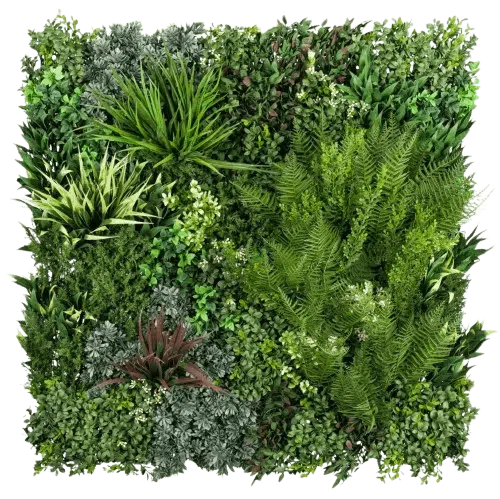
Our premium artificial green walls are designed to create a convincing, three-dimensional appearance during the day, with carefully selected foliage, multiple panel designs and extensive customisation options through our Colour and Texture Boxes.
This gives lighting designers plenty to work with.
The variation in foliage creates natural shadows and highlights, while the depth of the planting allows light to interact with the installation in different ways.
We also offer a full design service, meaning our team can discuss your proposed project and provide guidance on how the green wall could work within the wider space. If you’re considering green wall lighting, we’re happy to provide recommendations based on the position, size and intended use of the wall.
It is important to clarify that these are recommendations rather than a lighting installation service. Vistafolia does not supply or fit the lighting itself, so the final specification and installation of green wall lighting would need to be handled by an appropriate lighting specialist or contractor.
Our role is to help you understand how the greenery could interact with the lighting and ensure the overall concept works visually.
Green Wall Lighting: A Small Detail That Can Make a Big Difference
Green wall lighting might not be the first thing that comes to mind when planning the project, but it can have a surprisingly significant impact on the finished installation.
Uplighting can create drama and depth. Downlighting can produce a softer, more understated effect. Spotlights can draw attention to specific areas, while in some circumstances no additional lighting may be necessary at all.
The important thing is to consider the wall as part of the wider space.
Think about where people will be sitting, where they will approach the wall from, what other features are being illuminated and how you want the garden or interior to feel after dark.
Most importantly, remember that green wall lighting works best when it enhances genuinely high-quality greenery rather than attempting to disguise poor-quality foliage.
If you’re considering an artificial green wall and would like advice on how it could work within your space, contact the Vistafolia team. We’d be happy to discuss your project, advise on the greenery and provide recommendations for how lighting could complement the finished installation.
With the right combination of premium artificial greenery and carefully considered lighting, your green wall can become much more than a backdrop. It can become one of the defining features of your space, day or night.


 English (UK)
 English (United States)
 French