One of the biggest misconceptions about artificial green walls is that they can only be installed onto large brick walls or purpose-built garden structures. While these are certainly common applications, they represent only a small proportion of what is actually possible.
In reality, one of the greatest advantages of artificial green walls is their remarkable versatility. Because they are lightweight, modular and incredibly adaptable, they can be installed onto an enormous variety of surfaces, many of which might initially seem unsuitable.
We hear it all the time.
“Can you install onto glass?”
“What about railings?”
“Our wall has a waterproof membrane. Is that a problem?”
“We’d love one on the ceiling, but surely that’s impossible?”
The answer is often much simpler than people expect.
Yes, really.
With the right products, the right installation methods and, most importantly, the right experience, artificial green walls can be installed onto almost any substrate.
Of course, every project is different, and some installations require considerably more planning than others. The important thing is understanding the structure you’re fixing to and selecting the most appropriate installation method.
In this guide, we’ll explore some of the most common installation surfaces, explain how they’re typically approached, and demonstrate why experience matters when it comes to delivering a safe, long-lasting installation.
Why Artificial Green Wall Installations Are So Versatile
Unlike living walls, artificial green walls do not require irrigation systems, growing media, drainage layers or significant structural build-up. This immediately opens up a huge range of possibilities. Because the panels are comparatively lightweight, they can often be installed onto structures that would never be capable of supporting a traditional living wall. This gives designers and homeowners much greater freedom.
Instead of asking, “Can we put a green wall here?”, the conversation becomes, “How do we install it here?” and that’s a very different question. Rather than being limited by planting requirements, artificial green walls allow installation methods to be tailored to the individual project.
Sometimes the solution is incredibly straightforward. Occasionally it requires a little more creativity. Either way, there is almost always a solution.
Artificial Green Wall Installations on Brick, Concrete and Masonry
Brickwork, concrete and other solid masonry surfaces are among the most straightforward installation types. These structures provide excellent load-bearing capability and allow the green wall to be securely fixed directly to the substrate.
At Vistafolia, we use our purpose-designed fixing system, which has been independently tested to withstand hurricane-force wind conditions. This ensures every installation remains secure while allowing the panels to sit neatly against the wall for a clean, professional finish.
Natural stone and other forms of masonry can also accommodate artificial green walls. The installation process is broadly similar to brickwork, although additional care is often required when drilling to avoid damaging the stone or mortar joints.
Every project is assessed individually to ensure the most appropriate fixing method is used.
Artificial Green Wall Installations on Timber Structures
Timber is another excellent substrate for artificial green walls. Whether you’re installing onto a purpose-built timber frame, garden room, pergola or external cladding, fixing into wood is generally very straightforward.
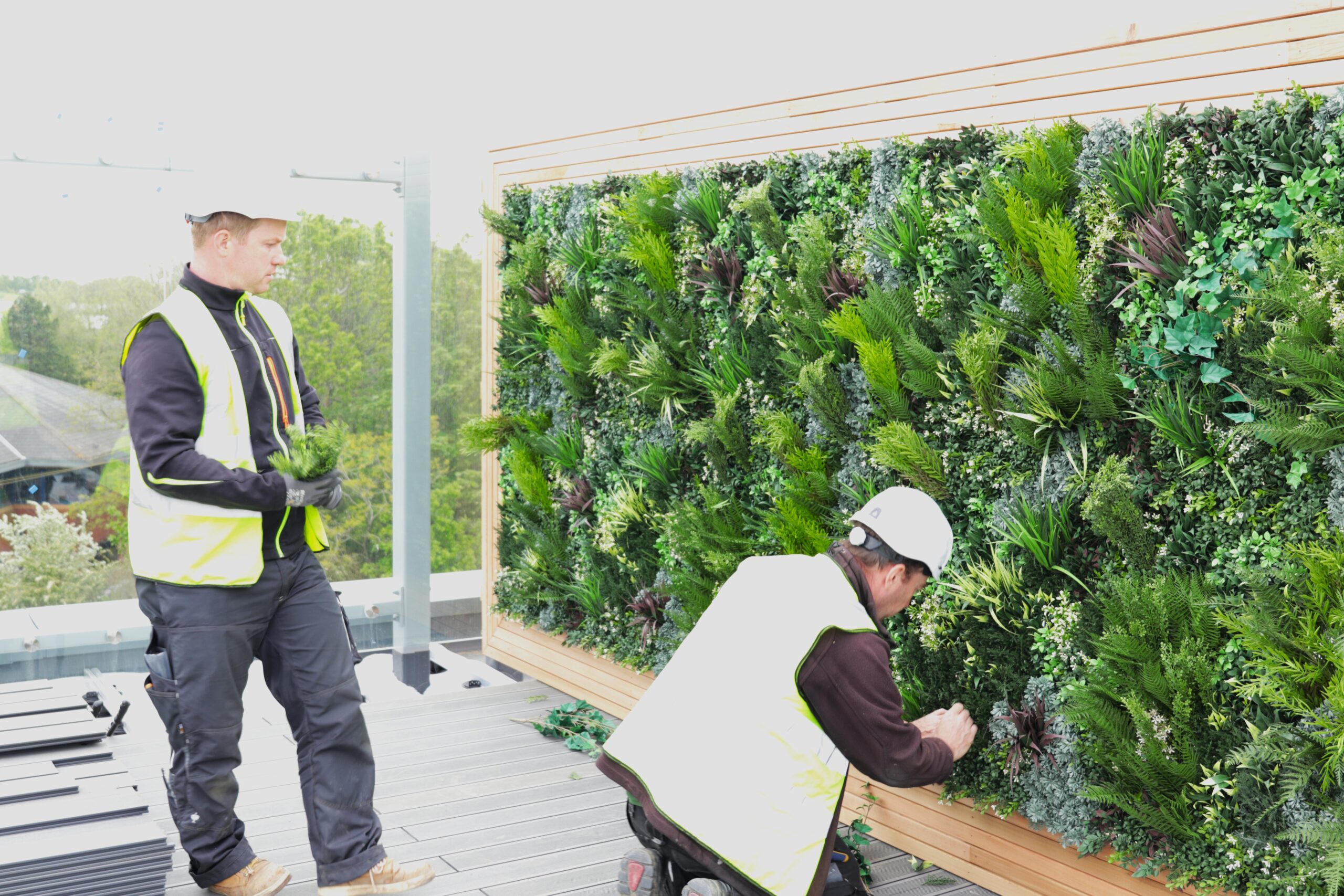
Panels are typically secured using screws and washers, creating a strong mechanical fixing while distributing the load evenly across the panel. For customers completing their own installation, this is often one of the simplest methods available.
Our team can provide guidance on panel layouts, fixing centres and overall design, or we can complete the installation ourselves for complete peace of mind.
Installing Artificial Green Walls onto Plasterboard
Many people assume plasterboard walls cannot support artificial green walls.
Fortunately, this is rarely the case. The installation method is very similar to fixing onto brickwork, with one important difference. Instead of using traditional wall plugs, specialist plasterboard fixings are used to provide secure anchorage within the wall.
Provided the correct fixings are selected and the wall is suitable for the intended installation, plasterboard presents very few difficulties. This makes artificial green walls an excellent option for offices, hotels, restaurants, reception areas and residential interiors.
Artificial Green Wall Installations on Wooden Fences
Fence installations are among the most common domestic applications. However, they are also one of the most varied. There is no universal approach because not all fences are constructed in the same way. Some timber fences are sufficiently robust for the panels to be fixed directly onto the boards. Others benefit from the installation of a supporting timber framework that distributes the load more evenly. In certain situations, it may be preferable to fix directly into the fence posts rather than the fence panels themselves.
The most appropriate solution depends entirely on the construction of the existing fence.
This is one reason why experience is so valuable. Rather than applying the same method to every project, we assess each installation individually to determine the safest and most durable approach.
Artificial Green Wall Installations on Railings and Metal Fences
Metal railings often appear challenging. In reality, they are frequently among the simplest installations. Rather than drilling into the metalwork, specialist metal cable ties can be used to secure the panels directly onto the railing system.
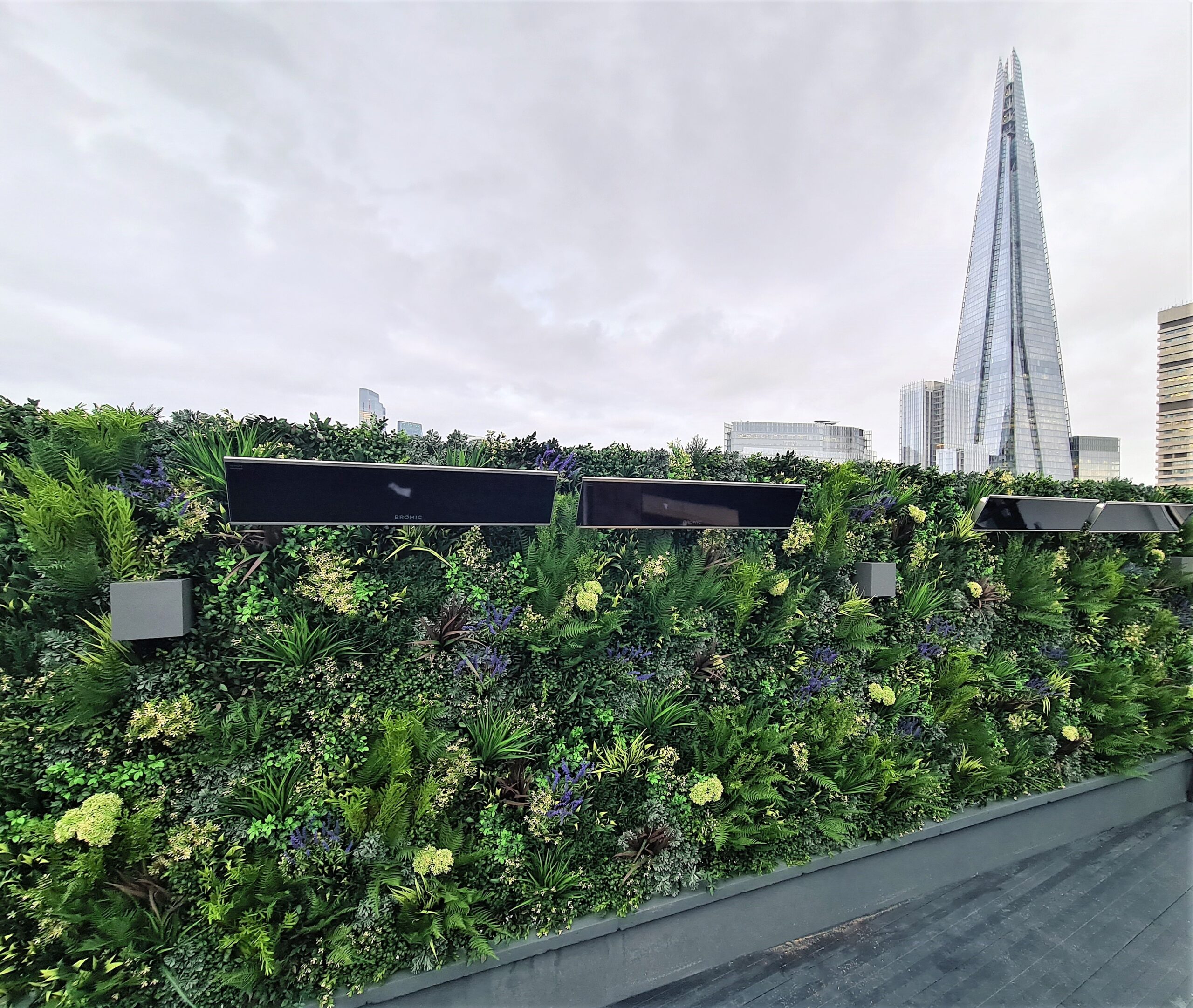
The result is a strong, discreet fixing that preserves the existing structure while creating a seamless green wall appearance. This method is particularly popular for balconies, roof terraces, schools, commercial developments and perimeter security fencing where drilling into the metal may not be desirable.
Can Artificial Green Walls Be Installed onto Glass?
We’ll be honest, it’s not something that we get asked too often. But the answer surprises most people that do ask: Yes. Artificial green walls can absolutely be installed onto glass.
Clearly, drilling through glass is not an option. Instead, we use a specialist structural adhesive to bond a carefully designed timber framework directly onto the glass. Once cured, this framework provides secure fixing points for the green wall itself.
The glass remains undamaged, while the installation achieves the appearance of a fully integrated living feature. We’ve completed numerous installations using this technique, demonstrating that seemingly impossible surfaces can often become some of the most impressive projects.
What About Walls That Cannot Be Drilled?
Certain buildings include waterproof membranes or specialist construction systems that cannot simply be drilled through. Lightwells are a perfect example. Penetrating the waterproof membrane could compromise the building envelope, making conventional installation methods unsuitable.
Fortunately, there are several alternatives. In some situations, the same bonded framework technique used for glass installations provides an ideal solution. Elsewhere, a bespoke support framework can be designed that transfers loads to suitable structural elements without disturbing the waterproofing.
For particularly complex projects, specialist contractors may be engaged to install dedicated fixing points designed specifically to maintain the integrity of the waterproof membrane. Every project is different, but solutions almost always exist.
Artificial Green Wall Installations on Roofs and Ceilings
Ceiling installations often create spectacular results. Whether above restaurant seating, hotel receptions, office breakout spaces or retail displays, overhead greenery immediately creates a dramatic visual impact. Naturally, these installations require careful planning. The available structure, permissible loads and fixing options all need to be considered before work begins.
In many cases, bespoke support frames provide the ideal solution.
By designing custom frameworks specifically for the project, artificial green walls can be installed safely while achieving exactly the appearance envisioned by the client.
Although ceiling installations are among the more technically demanding applications, they are something our team has successfully delivered many times.
Installation Experience Matters
From the outside, installing an artificial green wall might appear relatively simple. And in many cases, it is.
However, unusual substrates, challenging access conditions and specialist construction methods quickly introduce additional complexity. Knowing how to approach these situations comes from experience.
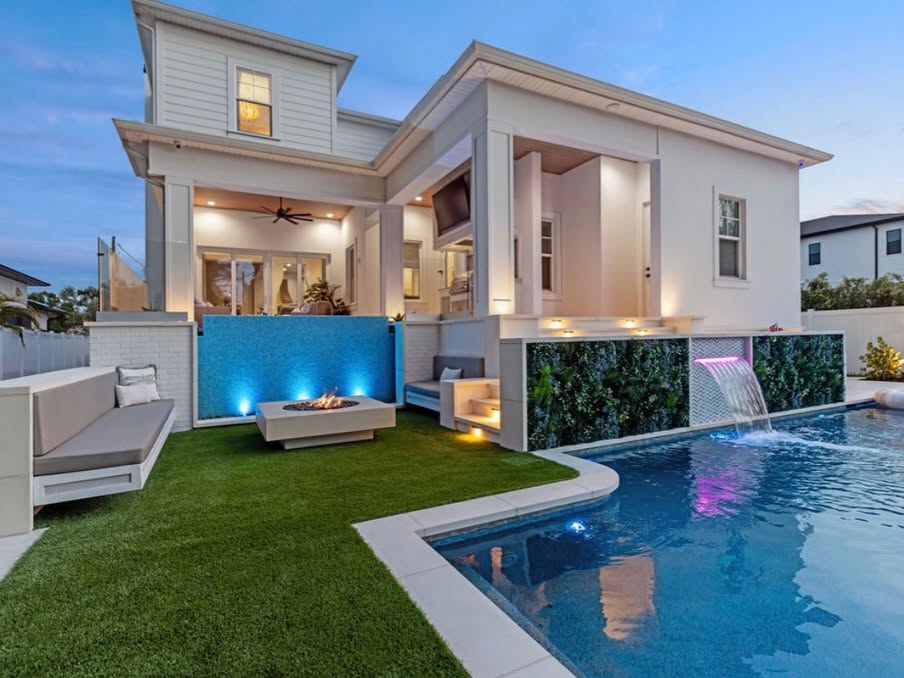
Over the years, we’ve worked on projects involving luxury homes, hotels, offices, restaurants, shopping centres, schools, rooftop terraces, lightwells, swimming pools and countless other environments. Every installation teaches something new. That accumulated knowledge allows us to solve problems that many suppliers simply haven’t encountered before. For our customers, that means confidence. Rather than wondering whether a particular surface is suitable, they can discuss their ideas with a team that has almost certainly tackled something similar already.
Why Choose Vistafolia for Artificial Green Wall Installations?
A successful artificial green wall installation depends on far more than the panels themselves.
It requires the right design, the correct fixing method and the experience to adapt to unusual situations. At Vistafolia, we’ve spent years refining not only our products but also the installation methods that support them.
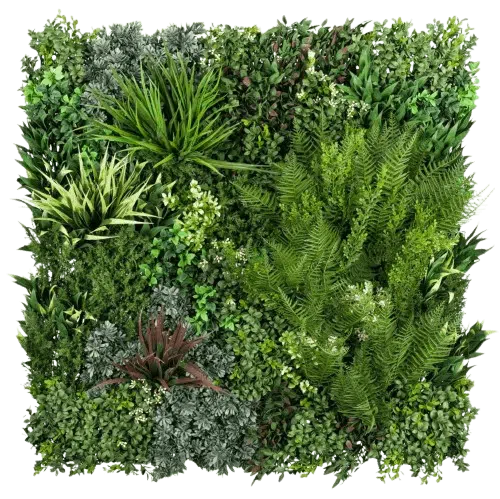
Our purpose-designed fixing system has been independently tested to withstand hurricane-force wind conditions, providing exceptional security across a wide variety of installations. Our premium artificial green walls are hand assembled using between 65 and 72 individual plants per panel, mounted onto durable stainless steel backing grids for long-term performance. Every installation benefits from our realistic multi-panel system, reducing visible repetition and creating a natural appearance across projects of every size.
We also offer complete project support, from concept design and visual mock-ups through to professional installation by our experienced team.
Whether your project is straightforward or highly unusual, we’ll work with you to develop the most appropriate solution.
Artificial Green Wall Installations Almost Anywhere
One of the greatest strengths of artificial green walls is that they are not limited by traditional planting methods or structural constraints.
Brick, timber, plasterboard, fencing, railings, glass, waterproofed walls, ceilings and many other surfaces can all accommodate artificial greenery when the correct installation techniques are applied.
While some projects require more creativity than others, the possibilities are often far greater than people imagine.
If you’re considering an artificial green wall but aren’t sure whether your chosen location is suitable, we’d love to help.
Contact the Vistafolia team today to discuss your project. Our experienced designers and installers have delivered hundreds of successful artificial green wall installations across an extraordinary range of environments, and we’ll help find the safest, most effective solution for your space.