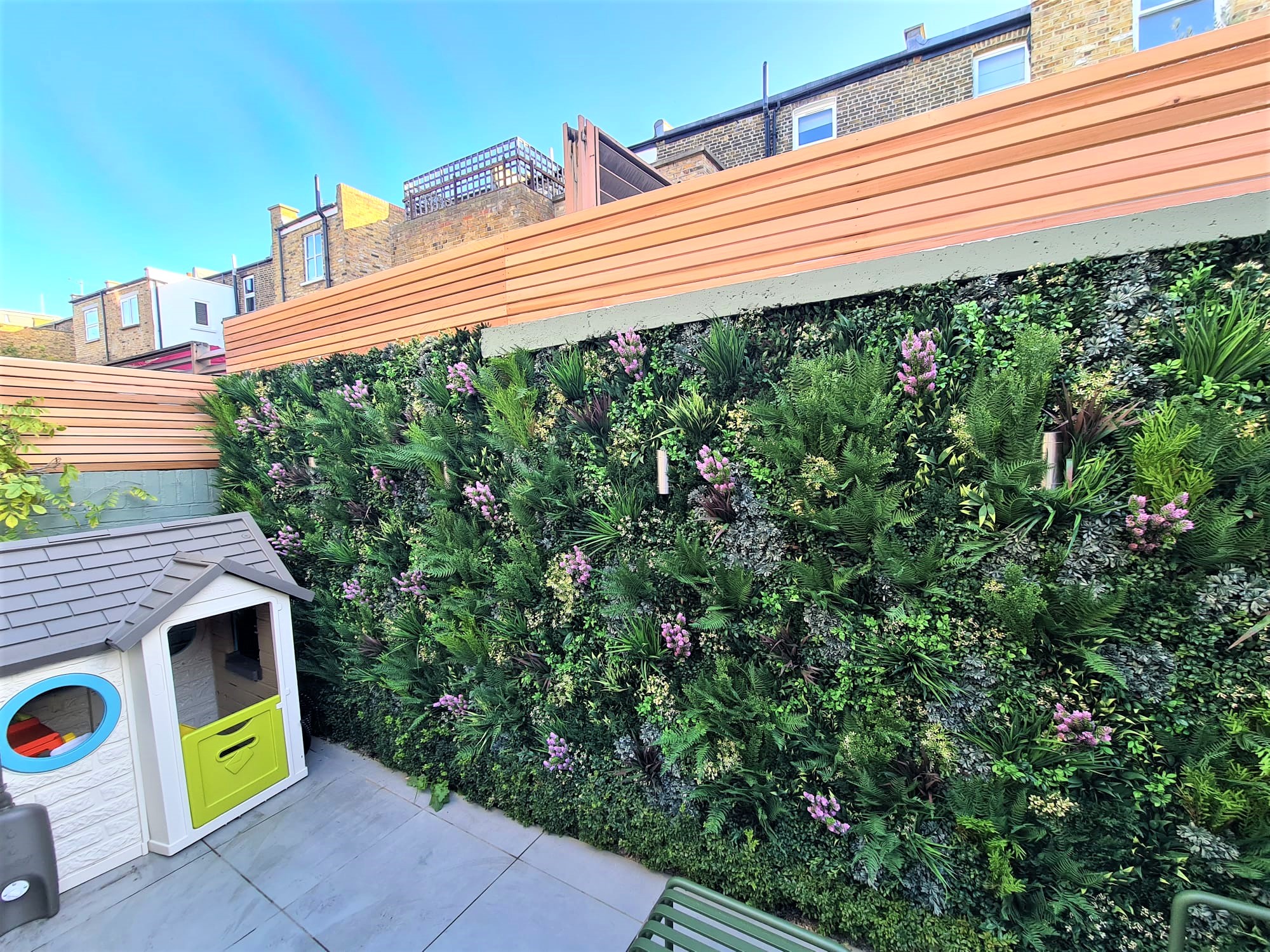
If you’re short on space but big on style, a vertical garden might just be the feature that you need. Whether it’s a small urban courtyard or a vast commercial wall, vertical gardens bring lush, layered greenery into places that traditional landscaping can’t. And the best part? With high-quality artificial options on the market, creating a beautiful, low-maintenance green wall has never been easier.
In this guide, we’ll explore what vertical gardens can be used for, help you to choose between living and artificial greenery, look at where they’re best installed, and show you how to get started.
What Is a Vertical Garden?
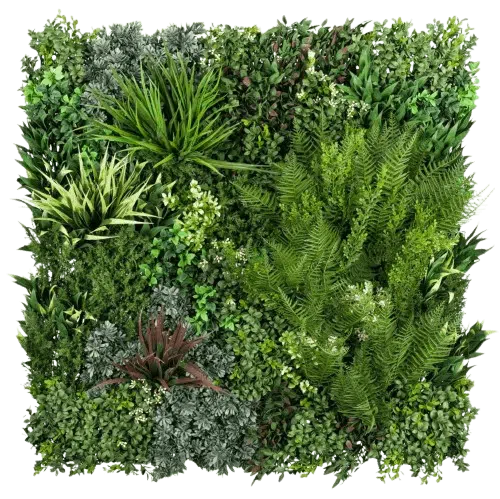
A vertical garden is exactly what it sounds like. You might have heard it called a living wall, green wall or a plant wall, but in essence it is a garden that is mounted vertically, usually on a wall or other upright structure. Traditionally, this meant living plant walls, but artificial vertical gardens have now emerged as a hassle-free, low-maintenance, and long-lasting alternative, offering the same visual impact with none of the upkeep.
Are Vertical Gardens a New Phenomenon?
You might be forgiven for thinking they are, but in reality the answer is no, not at all. Vertical gardens have been around for decades, first gaining traction in high-end architectural design and luxury landscapes. But in recent years, their popularity has grown dramatically. Thanks to advances in artificial greenery, they’re now more accessible, affordable, and easier to maintain than ever, bringing stunning green features to homes, businesses, and public spaces worldwide.
What Can a Vertical Garden Be Used For?
- Beautifying Bare Walls
That dull brick wall on the side of your home or the back of your office building? A fake green wall transforms it into a vibrant focal point that enhances the entire space. - Creating Privacy
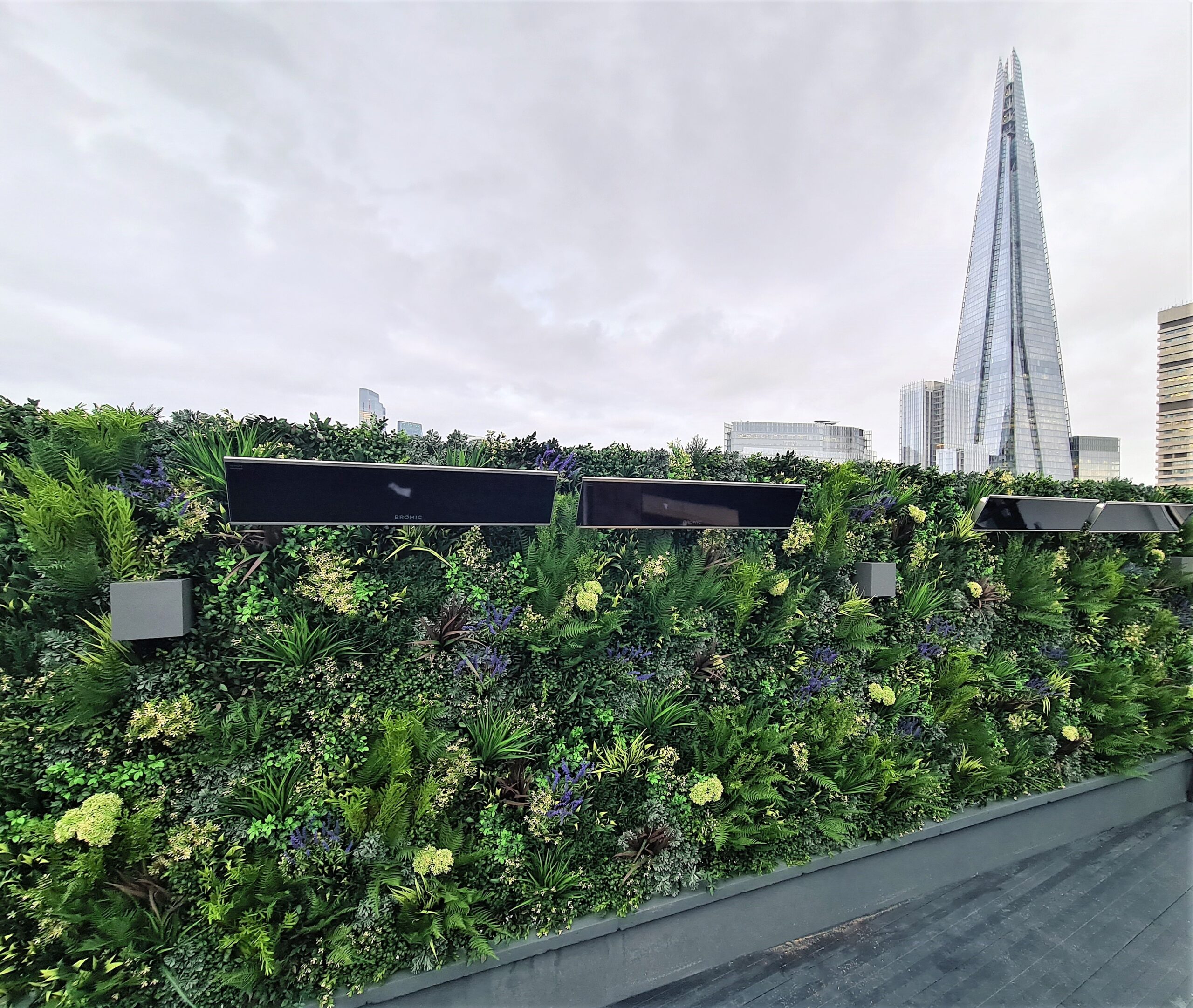
Install a vertical garden above a fence or along a balcony to create an effective green screen that blocks out neighbours, passers-by, or unsightly views, all while adding visual interest. - Bringing Nature Indoors
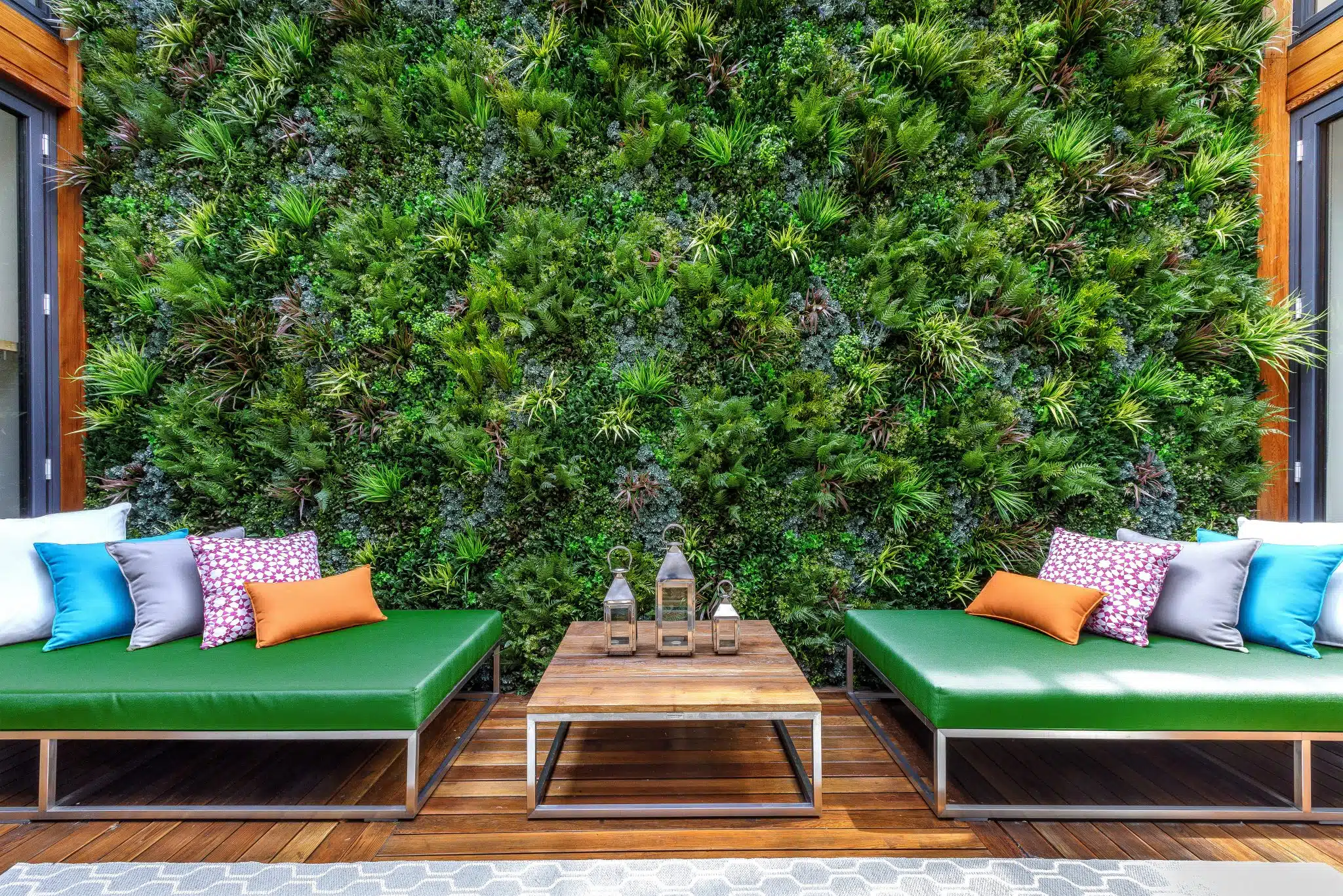
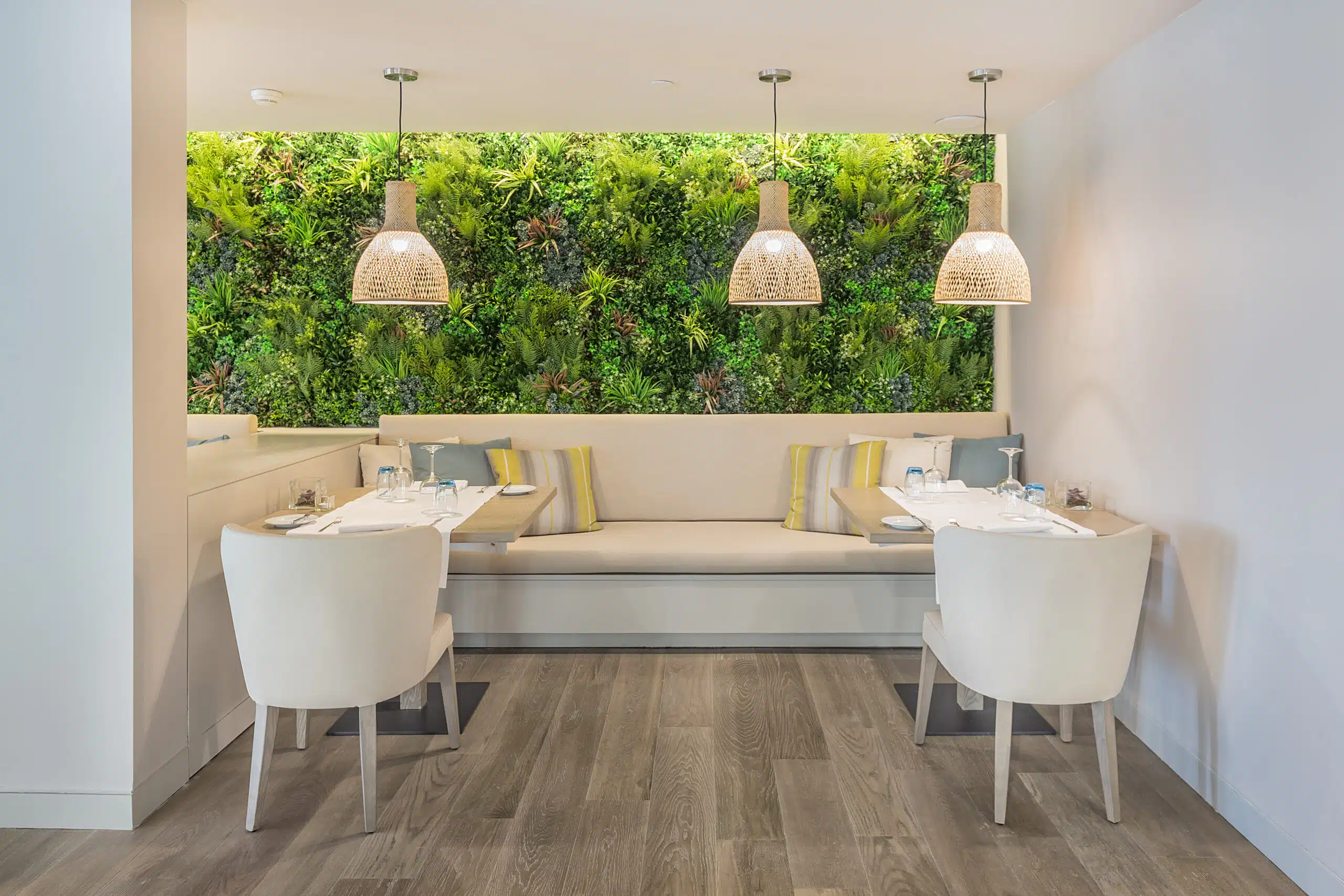
Artificial plant walls are a fantastic way to introduce biophilic design into interiors. They’re ideal for office receptions, hotel lobbies, restaurants, or even your own living room. - Maximising Small Spaces
In compact areas like patios, rooftops, or urban courtyards, going vertical allows you to enjoy greenery without sacrificing floor space. - Enhancing Brand Image
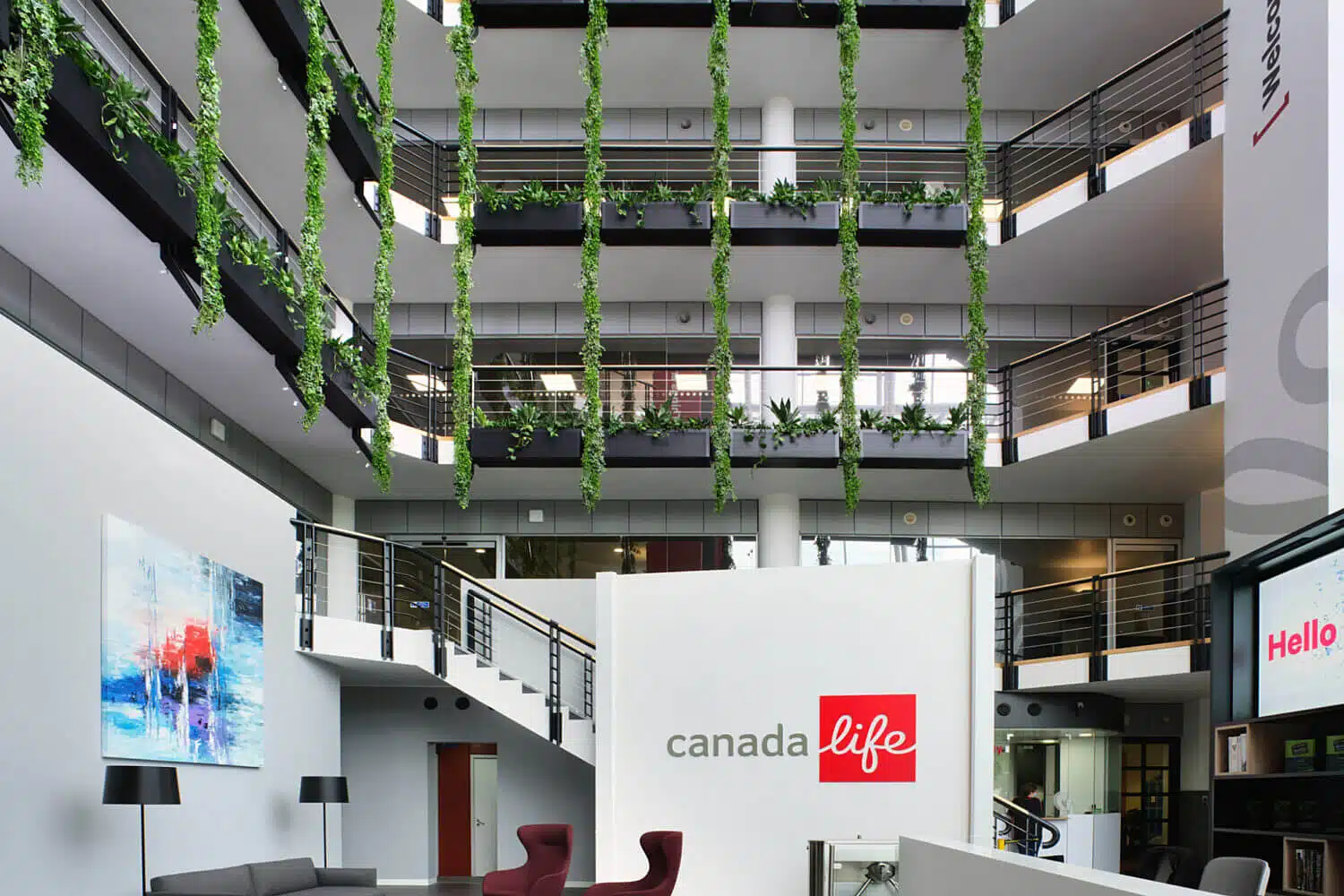
In commercial settings, a vertical garden can be a powerful visual tool. It helps create a calm and inviting atmosphere that speaks volumes about your brand’s identity and commitment to design. Combine it with your logo to have a have a real impact, like on these projects.
Living vs. Artificial Vertical Gardens
While living walls can be stunning, they require ongoing maintenance, including irrigation, feeding, trimming, and the occasional replanting, which in turn makes them expensive. They also require the right light and climate conditions to thrive thatyou simply may not have.
On the other hand, an artificial vertical garden gives you all the visual appeal of lush greenery, without the laborious work. There’s no watering, no mess, and no seasonal dieback. Just effortless, evergreen beauty, indoors or out.
Where Can You Install A Vertical Garden?
If you’re looking at an artificial solution, then it can be installed on almost any surface, as long as it’s stable. Popular locations include:
- Garden fences and brick walls
- Office and commercial interiors
- Balcony railings
- Pergolas and outdoor seating areas
- Reception areas or retail displays
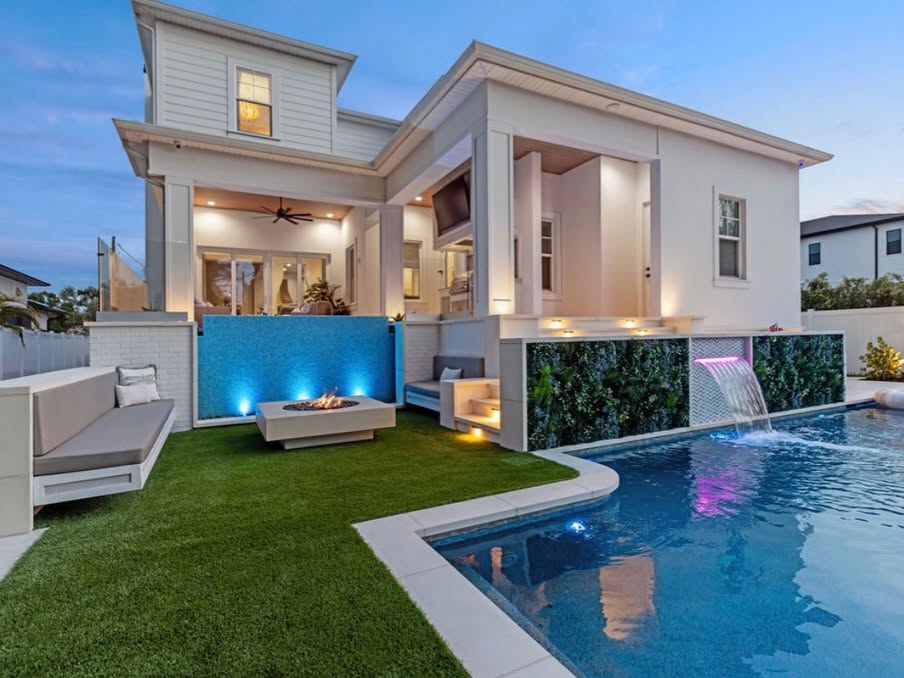
- Poolside enclosures and spa backdrops
Thanks to the lightweight design of artificial vertical garden panels, you don’t need to worry about structural reinforcement or irrigation systems.
In contrast, if you’re looking at a living wall, you need to allow for other considerations, like whether the wall will take the weight, the suitability for an irrigation system, access for maintenance and installation, among other things.
The Process: From Concept to Green Luxury
Setting up your vertical garden couldn’t be simpler:
- Measure Your Space
Note down the height and width of the wall or structure you’d like to cover. Using a m2 figure will give you an idea, but will not be as accurate. - Request a Quote
Reach out to us with your dimensions and preferred products. We’ll provide a tailored quote to suit your space and budget. - Choose DIY or Installation
Vistafolia panels are designed for straightforward self-installation, and we can guide you through the steps involved. But did you know that we also offer a full installation service if you’d prefer to leave it to the experts. - Enjoy the View
Once installed, your green façade is ready to impress. No watering can or secateurs required!
Why Choose Vistafolia?
At Vistafolia, we don’t just make vertical gardens, we redefine them. Our panels are designed with unrivalled realism, durability, and modular flexibility. Whether you’re looking to transform a compact terrace or improve a large commercial project, our products are crafted to suit every space and climate.
Ready to get started? Contact us today for a quote or to discuss your project. Your perfect vertical garden is just a few steps away.
FAQs
Our Vistafolia Artificial Vertical Gardens are fully UV (Ultraviolet) tested and certified, and therefore are able to sustain UV radiation in even the warmest environments.
We are the market leaders when it comes to the durability of UV within our green walls. UV radiation is the energy produced by the sun that, though invisible to the human eye, can have damaging effects on certain plastics. Other products don’t have the same UV certifications as Vistafolia and therefore their products aren’t as UV stable as ours. Plus, the vast majority cannot evidence any form of testing certification. UV degredation is cumulative so sadly it does not simply come and go. Don’t worry though, UV radiation does not cause any harmful damage to our vertical gardens and that’s why we warranty them for 5 years, longer than any other product on the market.
Some are, and you would need to speak to the supplier to find out whether the one you are looking at is. Vistafolia’s artificial green walls are recyclable but it is a specialist process and cannot just be popped into a recycling bin. Because we warranty them for 5-years and expect them to last even longer, we don’t foresee them needing to be recycled any time soon.
Get in touch with us to find out more.
It depends. If you’re looking at a living wall system then yes, they will require regular, ongoing maintenance. This is not only to keep their appearance, but is for safety reasons as well – a living wall that dies and dries out is a significant fire hazard! So if you don’t want to burden yourself with maintenance costs for the lifetime of your purchase, we recommend an artificial product.
Artificial panels may require a light hosing or dusting from time to time but other than that they are completely self-sufficient, giving you time to focus on more important things.
Vistafolia artificial green walls are built to last. Designed and developed in the UK, Vistafolia panels are built with a combination of long-lasting materials and scientific research that allows the product to withstand the elements. That’s why we offer a 5-year warranty, and expect a much longer lifetime, especially if installed in a shaded area, or indoors.
We cannot vouch for the performance of other artificial products, but performance will differ from a few months to a few years, depending on the quality.
Living walls can last a long time, but only with the right care and attention, and the right conditions to start with. If they’re not chosen carefully, and not suited to their environment, they may be doomed to failure right from the start. That’s where artificial solutions have the upper hand!
Artificial Green Walls in Winter: Will Cold Affect Them?
Can You Install an Artificial Green Wall Next to a Swimming Pool?
Green Walls for Acoustics: Can They Help Reduce Noise?