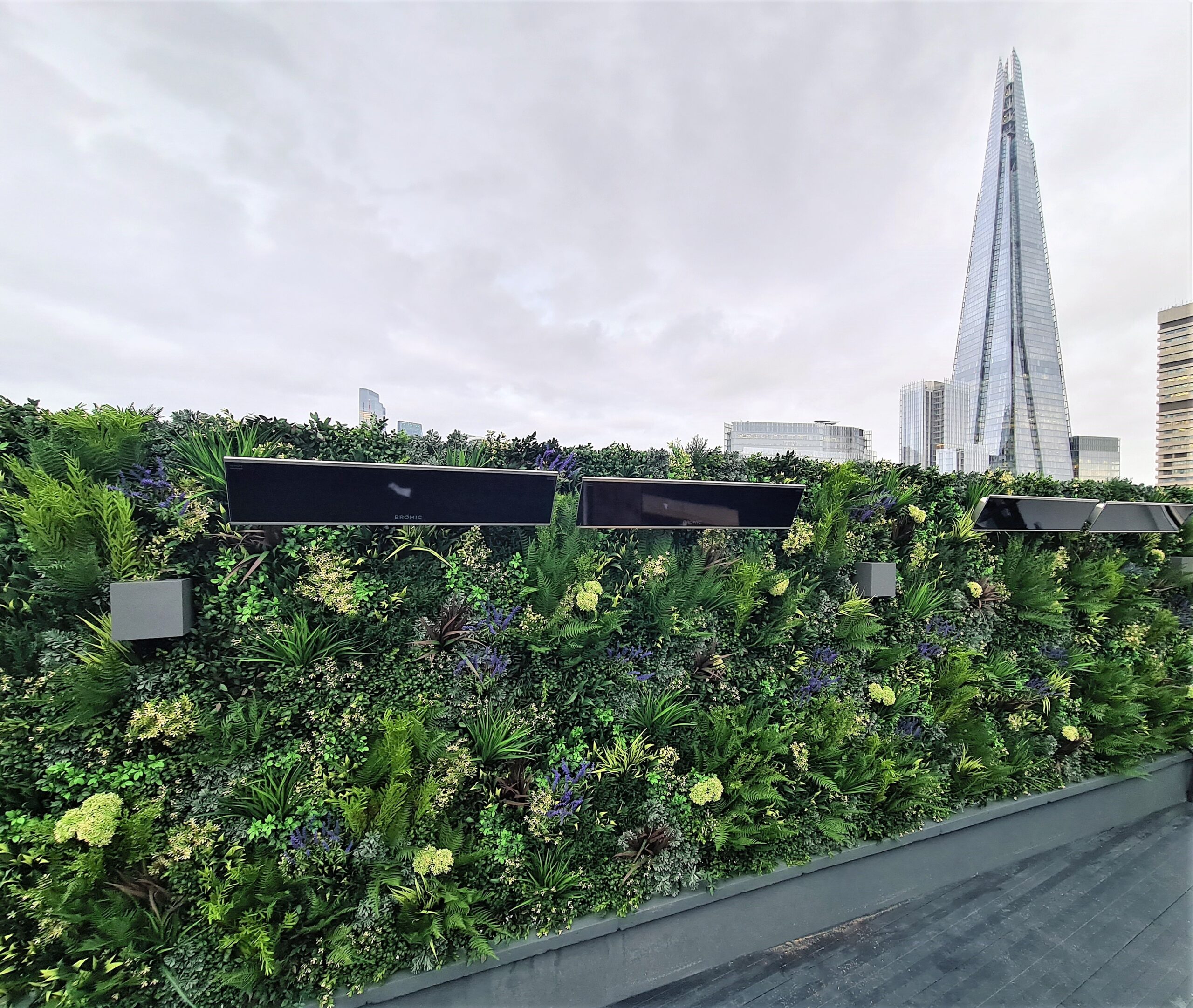
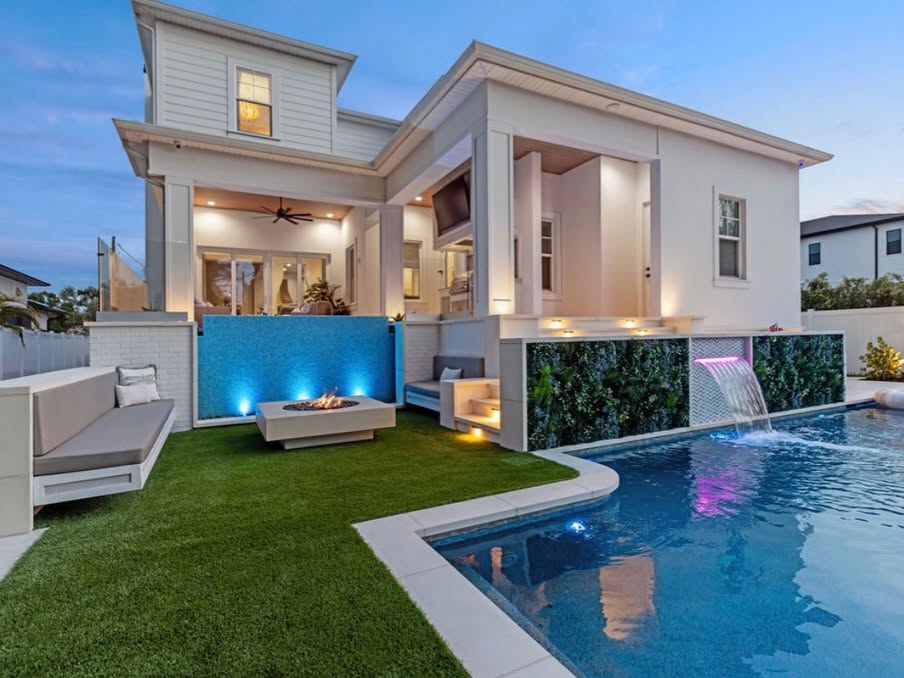
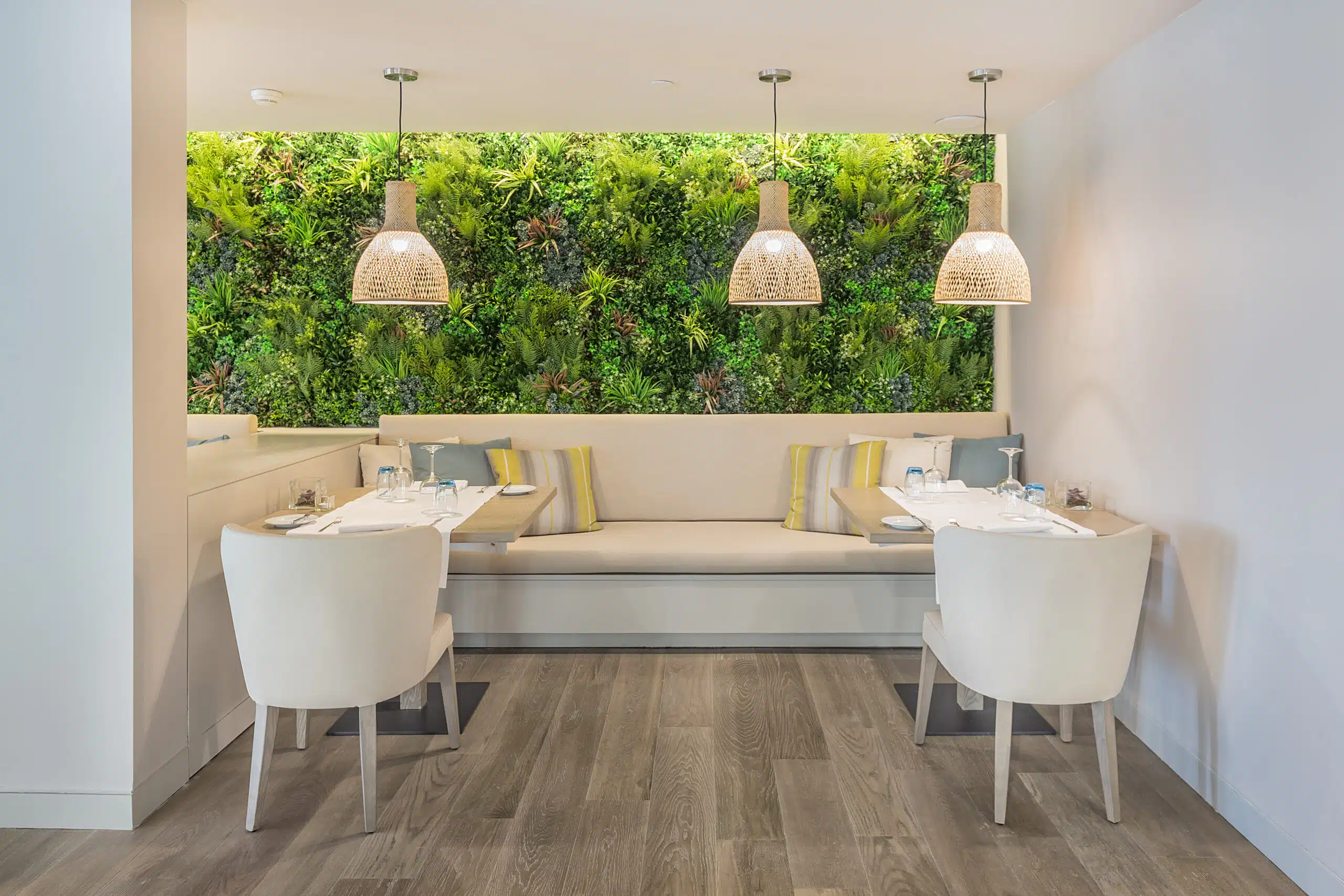
Green walls have become one of the defining design features of modern homes, offices, hospitality spaces, and commercial developments. Whether used to soften architecture, create privacy, or introduce a stronger connection to nature, they offer undeniable visual impact.
But while many people focus on how a greenery wall looks, one of the most important questions is often overlooked:
What does it actually cost over time?
When comparing living and artificial green walls, it is easy to focus purely on the upfront installation price. However, the reality is that the long-term cost of ownership tells a very different story.
Living walls require continuous care, infrastructure, and operational input to survive. Artificial walls, on the other hand, involve far fewer ongoing expenses once installed.
That does not automatically make one “better” than the other in every scenario. Living walls offer genuine horticultural and ecological benefits that some projects prioritise heavily. However, when evaluating overall financial commitment, particularly over a five-year period, artificial greenery walls often come out significantly ahead.
In this guide, we will provide a balanced comparison between living and artificial green walls, looking at:
- Initial costs
- Installation requirements
- Water usage
- Maintenance
- Longevity
- Repairs and replacement
- Long-term financial value
Because when it comes to green walls, the real cost is rarely the number on the initial quotation.
Understanding the Two Types of Greenery Wall
Before comparing costs, it is important to understand how the two systems differ.
A living green wall uses real plants grown vertically within a specialist structure. This usually includes planting pockets or containers, irrigation systems, drainage layers, pumps, and waterproofing measures.
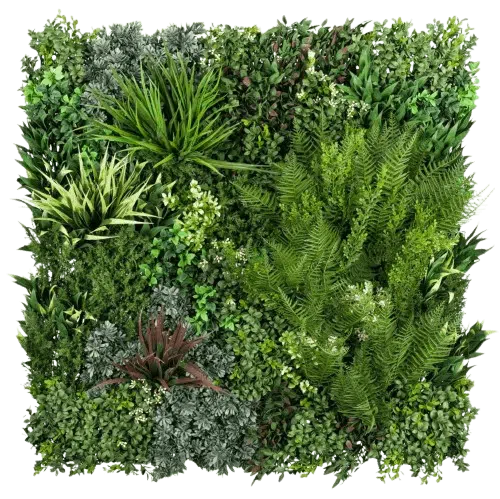
An artificial green wall uses high-quality artificial foliage panels designed to replicate the appearance of real planting without requiring soil, water, or ongoing horticultural maintenance.
Both can create visually impressive spaces. However, their ongoing demands are dramatically different.
Initial Costs: What You Pay Up Front
The first thing most buyers consider is installation cost.
Living green walls are often associated with premium pricing because of the infrastructure involved. These systems usually require:
- Irrigation systems
- Drainage solutions
- Waterproofing
- Structural support
- Specialist planting design
- Professional horticultural installation
Studies comparing vertical planting systems have shown that living walls can cost substantially more upfront than artificial alternatives once irrigation and structural requirements are included.
This is because living walls are not simply decorative installations. They are functioning biological systems that must support the long-term health of real plants.
Artificial greenery walls are generally simpler to install. Many systems use modular panels that can be fixed directly to existing surfaces with minimal supporting infrastructure.
As a result, installation tends to be:
- Faster
- Less disruptive
- Less technically complex
- More cost-effective
This difference becomes particularly noticeable on larger commercial projects.
Installation Complexity and Hidden Costs
One of the biggest misconceptions about living walls is that the visible planting is the entire system.
In reality, much of the complexity sits behind the foliage.
Living walls frequently require:
- Water supply access
- Drainage routing
- Electrical systems for irrigation pumps
- Moisture protection for surrounding structures
- Specialist access for maintenance
All of these elements add labour costs and long-term servicing requirements.
Artificial greenery walls avoid most of these hidden costs altogether.
Because there is no irrigation or drainage system, installation is often far more straightforward, particularly in offices, hospitality environments, or retrofit projects where introducing plumbing infrastructure would be difficult or expensive.
Water Usage: The Continuous Cost of Living Walls
One of the most important long-term considerations is water consumption.
Living walls require regular irrigation throughout the year, particularly during warmer months or in climate-controlled indoor environments where natural rainfall or humidity is absent.
Research into commercial living wall systems has shown that water usage can be significant, especially on large-scale installations where irrigation operates daily.
Beyond the direct cost of water itself, there are additional associated expenses including:
- Pump operation
- Electricity usage
- Irrigation servicing
- Leak prevention and repairs
Over time, these operational costs continue indefinitely.
Artificial greenery walls require no watering whatsoever.
This eliminates:
- Water bills associated with irrigation
- Energy costs for system operation
- Maintenance of pumps and pipework
- Risk of water damage
Over a five-year period, the savings are substantial.
Maintenance Costs: The Biggest Difference Over Time
The greatest financial divide between living and artificial greenery walls is ongoing maintenance.
A living wall is never truly “finished.” It is a living ecosystem that requires continual care to remain healthy and visually attractive.
Typical living wall maintenance includes:
- Pruning
- Fertilising
- Replacing dead or damaged plants
- Pest management
- Irrigation inspections
- Drainage maintenance
- Seasonal adjustments
Studies into vertical planting maintenance have shown that living walls often require scheduled professional visits throughout the year to maintain appearance and plant health.
These costs continue for the entire lifespan of the wall.
For commercial properties, this usually means ongoing maintenance contracts that become a permanent operational expense.
Artificial Walls and Minimal Maintenance
Artificial greenery walls operate very differently.
Once installed, maintenance requirements are minimal.
In most cases, upkeep involves little more than:
- Occasional dusting indoors
- Light washing outdoors
- Periodic inspections
There is:
- No watering
- No pruning
- No fertilising
- No plant replacement cycle
This low-maintenance approach is one of the primary reasons artificial greenery walls have become so popular in commercial and hospitality settings where operational efficiency matters.
Over five years, the maintenance savings alone can significantly outweigh the initial installation cost difference.
Longevity and Replacement Costs
When evaluating long-term value, durability matters enormously.
Living walls naturally evolve over time. Plants grow unevenly, environmental conditions change, and certain species may struggle in specific locations.
Research into living wall performance has shown that plant replacement and system refreshes are common within five to ten years, particularly if maintenance standards decline.
Irrigation systems may also require servicing or component replacement over time.
This means living walls often involve periodic reinvestment beyond standard maintenance costs.
Artificial Wall Longevity
High-quality artificial greenery walls are designed for long-term consistency.
Premium systems can maintain their appearance for many years with little visual deterioration when manufactured using UV-stable materials and durable structural components.
This consistency creates a major financial advantage because the wall does not rely on continuous biological health to maintain visual performance.
Rather than an ongoing cycle of upkeep and replacement, the majority of costs are concentrated upfront.
Risk and Reliability
Another often-overlooked cost factor is risk.
Living walls are vulnerable to:
- Plant disease
- Pest infestations
- Irrigation leaks
- Mould growth
- Uneven growth patterns
- Plant failure
When problems occur, remediation can become expensive very quickly.
Leaks alone can create serious issues within indoor commercial spaces, particularly if drainage systems fail.
Artificial greenery walls remove most of these variables entirely.
Because there are no living elements or irrigation systems involved, the likelihood of unexpected maintenance issues is dramatically reduced.
This reliability is particularly valuable in:
- Offices
- Hotels
- Restaurants
- Retail environments
- Public buildings
Where visual consistency and operational simplicity are essential.
Aesthetic Considerations
To present a balanced comparison, it is important to acknowledge that living walls provide certain qualities artificial systems cannot fully replicate.
Real plants offer:
- Natural fragrances
- Seasonal variation
- Ecological interaction
- Genuine biological growth
For some projects, these characteristics are highly desirable.
However, they also create unpredictability.
Living walls can become patchy, uneven, or stressed depending on environmental conditions and maintenance quality.
Artificial greenery walls offer a different advantage: consistency.
A high-quality artificial wall remains visually full, balanced, and vibrant throughout the year without seasonal decline or plant loss.
This is especially important in commercial environments where appearance directly influences customer and visitor perception.
Why the Five-Year Cost Matters Most
When comparing living and artificial greenery walls, the key point is this:
Living wall costs are ongoing. Artificial wall costs are largely upfront.
That distinction changes everything.
Over five years, living walls continue generating expenses through:
- Water usage
- Electricity
- Maintenance contracts
- Plant replacement
- Irrigation servicing
- Repairs and refresh work
Artificial greenery walls avoid the vast majority of these recurring costs.
This is why many businesses, developers, and homeowners ultimately find artificial solutions offer significantly better long-term value.
Why Quality Matters with Artificial Greenery Walls
It is important to note that not all artificial greenery walls are equal.
Poor-quality products may fade, crack, or lose realism over time, reducing both aesthetic value and lifespan.
High-quality systems should offer:
- UV stability
- Fire testing where required
- Dense, realistic foliage
- Durable structural backing
- Long-term warranties
Investing in quality is essential if the goal is genuine long-term value.
Why Vistafolia Delivers Long-Term Value
Vistafolia artificial greenery walls are designed specifically to combine realism, durability, and low maintenance.
Key advantages include:
- Premium, realistic foliage design
- UV-stable materials for outdoor longevity
- Minimal maintenance requirements
- Fire-tested systems for commercial suitability
- Professional installation expertise
- Long-term durability backed by warranty
Rather than creating ongoing operational burdens, Vistafolia walls are designed to provide consistent visual impact year after year.
For many customers, that reliability and simplicity become just as valuable as the appearance itself.
Final Thoughts
Living and artificial greenery walls both offer impressive visual benefits, but their long-term costs differ dramatically.
Living walls provide authentic natural interaction and ecological benefits, but they also require continuous investment through maintenance, water usage, repairs, and plant replacement.
Artificial greenery walls offer a different type of value: consistency, simplicity, reliability, and significantly reduced operational costs over time.
When viewed over a five-year period rather than simply the day of installation, artificial greenery walls often emerge as the more practical and financially sustainable solution.
If you are considering a greenery wall for your home, office, or commercial project, Vistafolia can help you create a solution that combines exceptional realism with long-term value.
Contact our team today to discuss your project and discover how artificial greenery can transform your space without the ongoing costs associated with living systems.