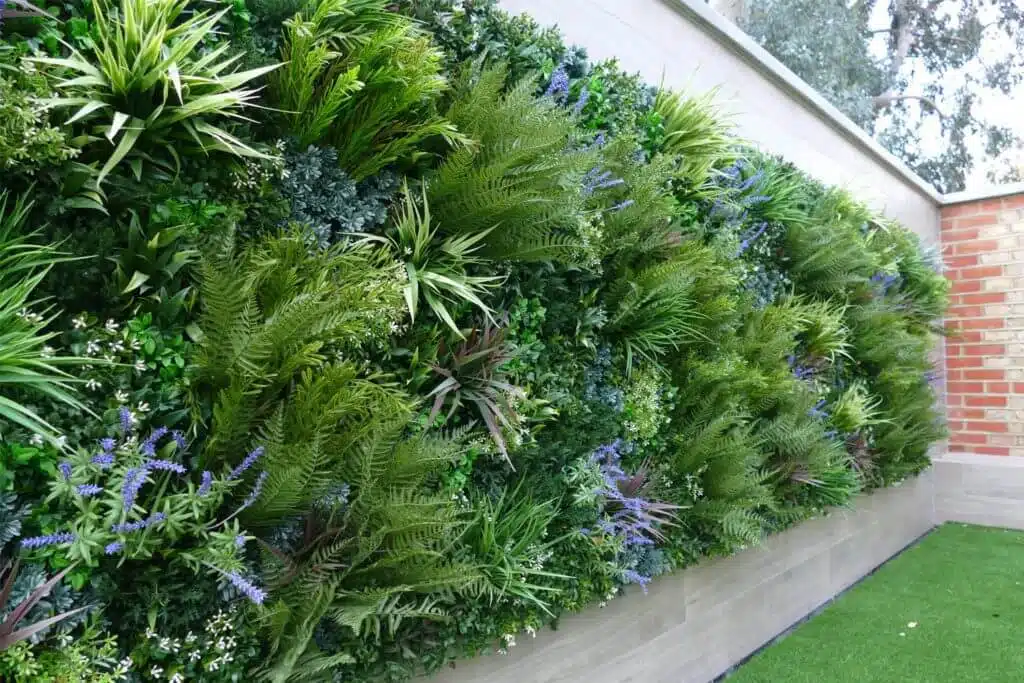
Green walls and vertical gardens have been gaining popularity in recent years as a unique and attractive addition to both residential and commercial properties. Not only do living walls still have their place in landscaping projects, but there is also an emerging market for artificial, low-maintenance solutions to give customers even more choice. But where did this trend come from and how has it evolved over time? In this blog post, we’ll explore the history of green walls and vertical gardens, from their origins to their current status as a sought-after design feature.
The origins of green walls can be traced back to ancient civilisations, where walls were often covered in vegetation for both aesthetic and practical purposes. These early green walls helped to regulate indoor temperatures, reduce noise pollution, and provide a source of food. However, it wasn’t until the 20th century that green walls started to gain widespread popularity.
The modern idea of a self-contained vertical garden is generally credited to Stanley Hart White, a landscape architecture professor at the University of Illinois. In 1938 he patented his “Vegetation-Bearing Architectonic Structure and System”, modular units he called “Botanical Bricks”.
Then, in 1986, French botanist Patrick Blanc unveiled his first major vertical garden at the Cité des Sciences et de l’Industrie in Paris. His hydroponic system, in which plants grow in an inert medium instead of soil, helped turn the living wall into a mainstream design feature, and his designs have since featured on landmark buildings such as One Central Park in Sydney.
The term “vertical garden” was coined to describe a new type of green wall that incorporated not just plants, but also other design elements such as water features and lighting. These innovative vertical gardens became popular in commercial and public spaces, helping to create unique and attractive environments.
The popularity of living walls and vertical gardens has continued to grow over the years, with many architects and designers recognising the many benefits they offer. These benefits include improving indoor air quality, reducing energy costs, and creating a more aesthetically pleasing environment. In addition, green walls and vertical gardens have also been shown to have a positive impact on employee well-being and productivity, making them an attractive option for companies looking to create a more efficient and effective workplace.
In the mid-2010s a new branch of green walls emerged – the artificial solution. Vistafolia were pioneers in this field, bringing their Signature Panels to the market and quickly establishing themselves as a trusted name in the industry, with high quality solutions suited to both indoor and outdoor spaces. Since then, the possibilities of vertical gardening with artificial plants has continued to grow, with technology improving and product performance becoming stronger. Not only are modern artificial vertical gardens longer-lasting, they are much safer than before, with products such as Vistafolia being independently tested for fire-rating to comply with modern building regulations.
Despite their growing popularity, green walls and vertical gardens are still a relatively new design feature for many architects and designers and there is much that is still being learned about them. However, the future looks bright for these innovative and attractive design elements, with many architects and designers predicting that they will continue to grow in popularity over the coming years.
In conclusion, the history of green walls and vertical gardens is one of evolution and innovation. From their origins as practical solutions to modern design elements, green walls and vertical gardens have come a long way and show no signs of slowing down. Whether you’re an architect, designer, or prospective client, it’s worth considering the many benefits that these unique design features can bring to your next project.
Inspired to include a vertical garden in your next project? Contact Vistafolia today to discover your options. Our team of vertical garden experts can help you every step of the way, from the initial green wall consultation, to the installation, we’ll support you throughout your green wall journey.
FAQs
A green wall, also called a vertical garden or living wall, is a wall covered with vegetation. It can use living plants, which need irrigation and ongoing care, or realistic artificial plants, which need neither.
The first known vertical garden patent was filed in 1938 by Stanley Hart White, a landscape architecture professor at the University of Illinois. French botanist Patrick Blanc modernised and popularised the idea, unveiling his first major vertical garden in Paris in 1986.

Green Walls for Cruise Ships: Lush Greenery at Sea, Without the Maintenance Burden

Artificial Green Wall Specification Guide

How Artificial Green Walls Are Made: Behind the Scenes at Vistafolia
 English (UK)
 English (United States)
 French